
Monarda (Bee Balm)
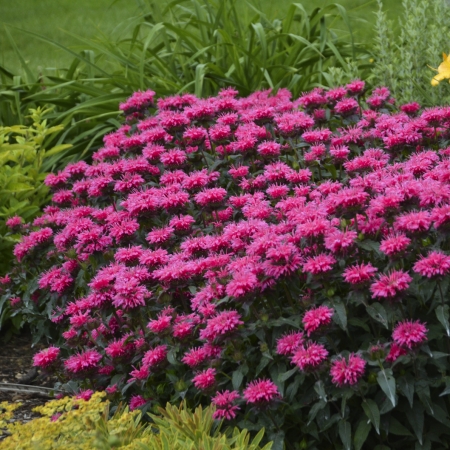
Color Name: Bubblegum Blast
In midsummer, Sugar Buzz® Bubblegum Blast forms a solid dome of hot pink, 2-2½flowers on strong, well-branched stems. The dark green foliage forms an upright clump that will fill out containers nicely but won't run all over the garden. It displays above average resistance to powdery mildew.
Monarda is native to eastern North America, so it is easy to grow and it multiplies quickly. The flowers' sweet nectar attracts scores of hummingbirds, butterflies, and bees to the garden. The aromatic foliage smells like mint when crushed and is often used to flavor teas.
Growing Tips: Monarda can be found naturally along riverbanks and enjoys this rich, organic, moist soil. However, it will grow in average soil as well. Full sun is best, but light shade is tolerated. Plants tend to spread more quickly in the shade, however.
Most Monardas multiply rapidly either by underground stems or self-sowing. Deadheading spent blooms will prolong the bloom time.
Powdery mildew is a common fungal problem with Monarda. Some varieties are more resistant to it than others. To prevent this fungus from appearing, large clumps should be thinned out so that the air circulates freely around them. The soil should also be kept consistently moist; dry soil promotes powdery mildew.
Photo courtesy of Walters Garden, Inc.
In midsummer, Sugar Buzz® Bubblegum Blast forms a solid dome of hot pink, 2-2½flowers on strong, well-branched stems. The dark green foliage forms an upright clump that will fill out containers nicely but won't run all over the garden. It displays above average resistance to powdery mildew.
Monarda is native to eastern North America, so it is easy to grow and it multiplies quickly. The flowers' sweet nectar attracts scores of hummingbirds, butterflies, and bees to the garden. The aromatic foliage smells like mint when crushed and is often used to flavor teas.
Growing Tips: Monarda can be found naturally along riverbanks and enjoys this rich, organic, moist soil. However, it will grow in average soil as well. Full sun is best, but light shade is tolerated. Plants tend to spread more quickly in the shade, however.
Most Monardas multiply rapidly either by underground stems or self-sowing. Deadheading spent blooms will prolong the bloom time.
Powdery mildew is a common fungal problem with Monarda. Some varieties are more resistant to it than others. To prevent this fungus from appearing, large clumps should be thinned out so that the air circulates freely around them. The soil should also be kept consistently moist; dry soil promotes powdery mildew.
Photo courtesy of Walters Garden, Inc.
|
Flower Color: Pink shades Foliage Color: Green shades
Height: 24 to 26 Inches Spread: 32 to 34 Inches Hardy in Zone: 4,5,6,7,8,9 |
Blooms: Mid-Summer
Foliage Season: |
Exposure

Full Sun

Partial Shade
Soil Moisture Needs

Moderate
Attributes |
 Fragrant  Native Cut Flower or Foilage Border Landscapes Mass Planting
|
Attracts

Hummingbirds
Critter Resistance

Deer