
Clematis (Clematis Group 2)
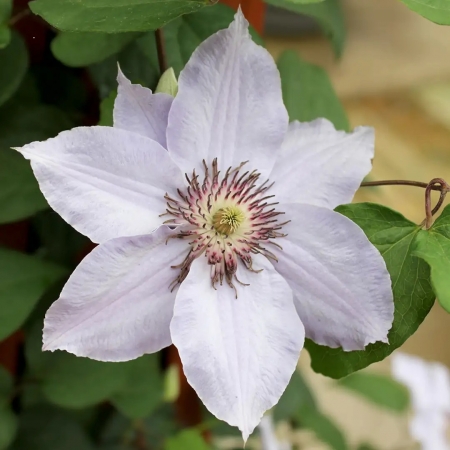
Color Name: Still Waters®
It's cooler than cool! Large, icy violet-blue flowers cover Still Waters clematis. Early flowering, long-lasting blooms appear from late spring to late summer. Unusual flower color looks especially striking planted on a trellis or fence. It also makes a good cut flower. Blooms on old and new wood.
.For beautiful colors, extravagance of blooms, and graceful habit, nothing compares with Clematis, the queen of the flowering vines. Whether used on posts or fences, clambering through shrubs and trees, or following wire frames in borders, they will enrich the landscape.
Growing Tips: "Feet in the shade, head in the sun" - that's the old adage for success with clematis. This vine will thrive if mulch, a rock, or neighboring plants are positioned to keep the roots and base of the plant in cool, shaded conditions, while the leafy vines themselves bask in the sun. Provide a sturdy structure for vines to climb on at planting time.
SOIL PREPARATION: Clematis need a moist, well-drained soil. Prepare your hole at least one foot deep and mix the soil with 50% peat moss or well-rotted manure. Backfill the hole with the amended soil and plant your clematis so the top of the root ball is just below ground level covering the first set of eyes. The plant should be mulched and kept moist, not wet, especially during the first growing season. Fertilize every four weeks during the growing season with a well-balanced liquid fertilizer.
SUPPORT: The main stem of the clematis must have a firm support, otherwise wind damage may occur. As the newly planted clematis produces new growth, it should be carefully trained and tied into position.
PRUNING: Prune back to 2' in spring.
Photo courtesy of Spring Meadow Nursery, Inc.
It's cooler than cool! Large, icy violet-blue flowers cover Still Waters clematis. Early flowering, long-lasting blooms appear from late spring to late summer. Unusual flower color looks especially striking planted on a trellis or fence. It also makes a good cut flower. Blooms on old and new wood.
.For beautiful colors, extravagance of blooms, and graceful habit, nothing compares with Clematis, the queen of the flowering vines. Whether used on posts or fences, clambering through shrubs and trees, or following wire frames in borders, they will enrich the landscape.
Growing Tips: "Feet in the shade, head in the sun" - that's the old adage for success with clematis. This vine will thrive if mulch, a rock, or neighboring plants are positioned to keep the roots and base of the plant in cool, shaded conditions, while the leafy vines themselves bask in the sun. Provide a sturdy structure for vines to climb on at planting time.
SOIL PREPARATION: Clematis need a moist, well-drained soil. Prepare your hole at least one foot deep and mix the soil with 50% peat moss or well-rotted manure. Backfill the hole with the amended soil and plant your clematis so the top of the root ball is just below ground level covering the first set of eyes. The plant should be mulched and kept moist, not wet, especially during the first growing season. Fertilize every four weeks during the growing season with a well-balanced liquid fertilizer.
SUPPORT: The main stem of the clematis must have a firm support, otherwise wind damage may occur. As the newly planted clematis produces new growth, it should be carefully trained and tied into position.
PRUNING: Prune back to 2' in spring.
Photo courtesy of Spring Meadow Nursery, Inc.
|
Flower Color: Purple Shades Foliage Color: Green Shades
Height: 9 to 10 Feet Spread: 6 to 8 Feet Hardy in Zone: 3, 4, 5 |
Blooms: Summer
Foliage Season: All Season |
Exposure

Full Sun

Partial Shade
Soil Moisture Needs

Moderate
Attributes |
 Extended Bloomer  Fragrant  Trellis or Wall Easy to Grow Landscapes Specimen Plant
|
Attracts

Butterflies

Hummingbirds
Critter Resistance

Deer

Rabbit