
Asclepias tuberosa (Butterfly Weed)
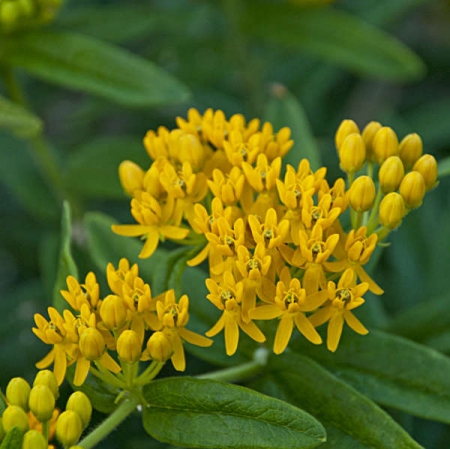
Color Name: Yellow Butterfly Weed
A virtually hassle-free perennial, offering three months of sunshine yellow blooms from early to late summer. Deadheading the flowers will stimulate another bloom cycle about a month after the first one. The flowers, which are heavily laden with nectar and pollen, are particularly attractive to hummingbirds, butterflies, bees, and other beneficial insects. Gather bouquets of Asclepias all summer long; the long stems are wonderful for cutting and are long-lasting. Sear the ends of the cut stems over a flame to stop the milky sap from leaking out. Following the fabulous flowers, green fruits develop which rupture to reveal seeds with long, silvery-white, silky hairs reminiscent of its cousin, common milkweed. These are great to use in dried flower arrangements.
Growing Tips: Asclepias tuberosa is found naturally in dry fields and on slopes, it does not require rich soil or much moisture. A full day of sun is best along with a slightly acidic, sandy-humus-loam that is well-drained (especially in winter). Once established, Butterfly Weed is drought-tolerant and requires little care. Though it is perfectly cold-hardy in the north, mulching plants in winter will help prevent frost-heaving. In spring, trim back last year's growth and await the beautiful new foliage which will appear quite a bit later than other perennials.
Photo courtesy of Walters Garden, Inc.
A virtually hassle-free perennial, offering three months of sunshine yellow blooms from early to late summer. Deadheading the flowers will stimulate another bloom cycle about a month after the first one. The flowers, which are heavily laden with nectar and pollen, are particularly attractive to hummingbirds, butterflies, bees, and other beneficial insects. Gather bouquets of Asclepias all summer long; the long stems are wonderful for cutting and are long-lasting. Sear the ends of the cut stems over a flame to stop the milky sap from leaking out. Following the fabulous flowers, green fruits develop which rupture to reveal seeds with long, silvery-white, silky hairs reminiscent of its cousin, common milkweed. These are great to use in dried flower arrangements.
Growing Tips: Asclepias tuberosa is found naturally in dry fields and on slopes, it does not require rich soil or much moisture. A full day of sun is best along with a slightly acidic, sandy-humus-loam that is well-drained (especially in winter). Once established, Butterfly Weed is drought-tolerant and requires little care. Though it is perfectly cold-hardy in the north, mulching plants in winter will help prevent frost-heaving. In spring, trim back last year's growth and await the beautiful new foliage which will appear quite a bit later than other perennials.
Photo courtesy of Walters Garden, Inc.
|
Flower Color: Yellow Shades Foliage Color: Green Shades
Height: 20 to 26 Inches Spread: 20 to 26 Inches Hardy in Zone: 3 |
Blooms: Summer
Foliage Season: All Season |
Exposure

Full Sun

Partial Shade
Soil Moisture Needs

Dry

Moderate
Attributes |
 Dried Flower  Extended Bloomer  Native Border Drought Tolerant Landscapes Mass Planting Specimen Plant
|
Attracts

Butterflies

Hummingbirds
Critter Resistance

Deer